



News analysis · Analysis by Fox Tucker
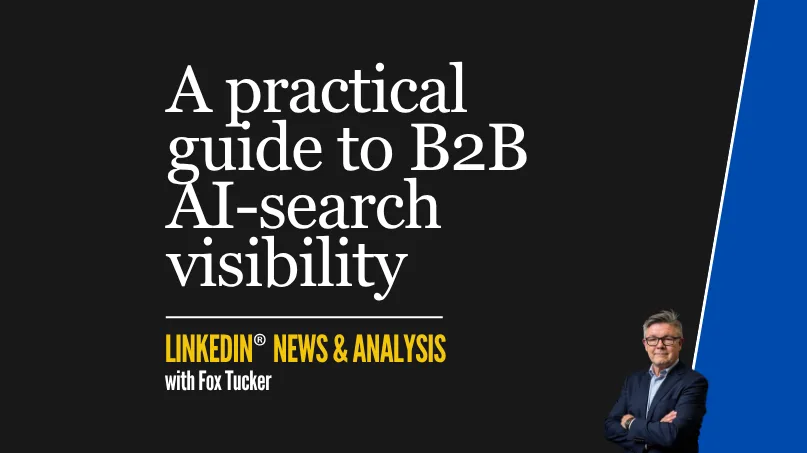
LinkedIn® has moved beyond general claims about AI search and published a practical guide for B2B marketers. Its central argument is significant: buyers are increasingly building shortlists inside AI tools before reaching a company website, and LinkedIn® content is becoming part of the evidence those systems use.
The guide says LinkedIn® is the most-cited domain for professional queries in research from Profound. It also argues that visibility depends on more than publishing volume: clear structure, distinct expertise, coordinated organisational signals and measurement of citations all matter.
LinkedIn® is describing a content system
The most useful part of the guidance is that it does not reduce AI visibility to a new collection of SEO tricks. LinkedIn® recommends combining owned content, social activity, employee voices, public relations and subject expertise around consistent themes.
That is a reputation system rather than a posting schedule. An AI model is more likely to form a confident association when a company, its leaders, its employees and credible third parties repeatedly provide compatible evidence.
Articles and posts have different jobs
LinkedIn® says articles account for roughly 60 percent of LinkedIn® content citations, with posts accounting for the remaining 40 percent. The distinction matters. Articles provide depth, structure and a durable answer; posts provide timely signals, narrower observations and repeated reinforcement.
A company that relies only on feed posts may create activity without building enough depth. A company that publishes only occasional long-form pieces may create useful reference material without generating the continuing signals that keep a subject association current.
What B2B companies should do
Start with one commercially important subject rather than attempting to become visible for everything. Publish a substantial article that answers a real buyer question, then support it with shorter posts from the Company Page and appropriate internal experts.
Use consistent terminology, clear headings and self-contained explanations. Connect the company’s claims to named people, evidence and external sources. Then assess whether AI systems associate the organisation with the intended subject—not merely whether a post accumulated impressions.
Leaders Social assessment
The guide validates a shift already visible in B2B communication: discoverability is becoming an outcome of accumulated credibility. Structure helps machines extract information, but structure without expertise merely makes generic content easier to process.
The competitive advantage belongs to organisations that can coordinate genuine knowledge across their Page, leaders, website and external evidence. That is slower than chasing a feed tactic, but it creates an asset that can compound.
Original source
Davang Shah, VP of Marketing at LinkedIn®, published New Guide: How B2B Marketers Can Dominate AI Search on LinkedIn® on 11 August 2026.