



News analysis · Analysis by Fox Tucker
LinkedIn® has published unusually specific advice about preparing posts and articles for AI-powered discovery. The recommendations include clean opening lines, clear questions and answers, educational value, consistent publishing and the deliberate pairing of short posts with longer articles.
The guidance matters because it treats LinkedIn® content as more than feed material. Public posts and articles can become retrievable evidence that helps AI systems understand a person, company or subject.
The first line now does two jobs
LinkedIn® notes that the opening line of a post can influence its URL. That gives the first sentence a technical role as well as an editorial one. A clear, descriptive opening can help both readers and retrieval systems understand what the post addresses.
This does not mean every post should begin with an awkward keyword phrase. It means the opening should make a concrete promise rather than relying on suspense that only becomes meaningful several lines later.
Posts and articles are complementary
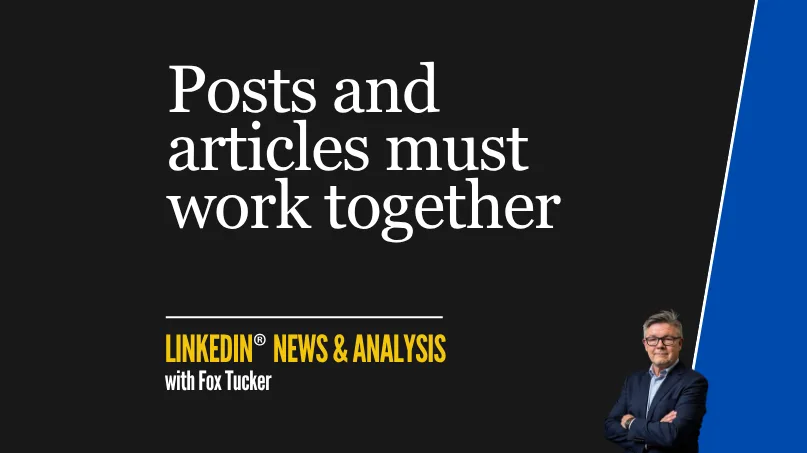
The platform recommends using substantial articles as citation-worthy anchors, then developing several narrower posts from the ideas, evidence or questions within them. Posts can test angles and create conversation; articles can provide the depth and structure needed for a durable reference.
That model is particularly useful for Company Pages. Instead of producing unrelated daily updates, a business can build a connected cluster around one important subject, with the Page, website and relevant leaders reinforcing it from different angles.
Where the formula needs judgement
LinkedIn® suggests posts of roughly 200 to 300 words and a consistent frequency of two or three posts per week. Those figures are useful operating guidance, not universal rules.
A weak organisation publishing three times each week will not outbuild a credible organisation publishing less frequently with stronger evidence. Cadence helps create continuity, but authority still depends on what is being said, who can credibly say it and whether the material answers a real question.

Leaders Social assessment
The most valuable recommendation is to stop treating every post as a separate performance event. Articles and posts should form a body of work. Each publication can answer a different part of the same commercial or professional question.
That approach is better for readers, easier for internal experts to contribute to and more likely to create the consistent entity signals that search and AI systems can interpret. The objective is not merely more LinkedIn® activity. It is clearer, cumulative evidence of expertise.
Original source
Davang Shah, VP of Marketing at LinkedIn®, published How to Maximize AI Visibility for Your LinkedIn® Posts on 30 June 2026.